
Reject the Simulation

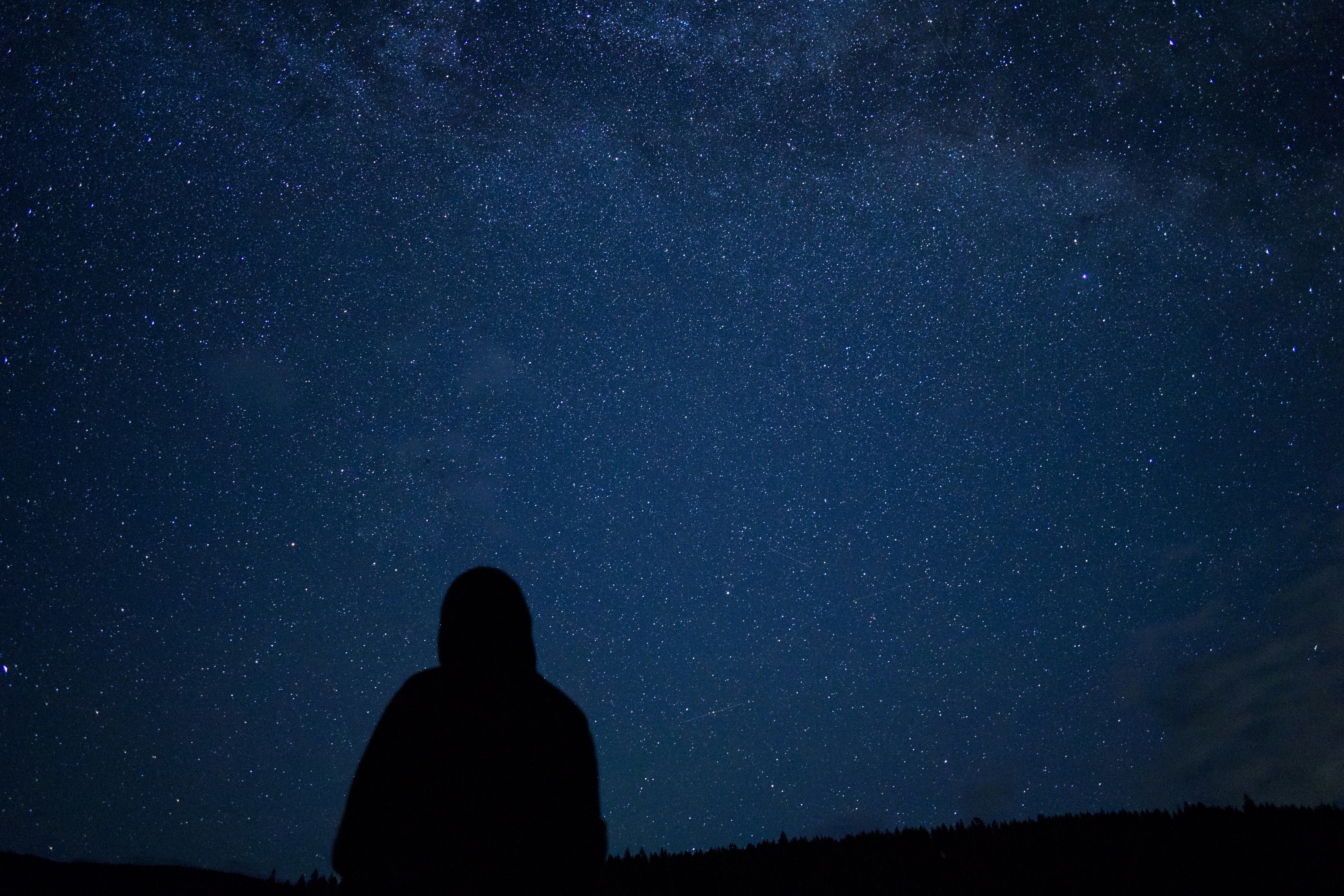
Last week, as I ordered coffee at the local shop, I was amused by the college baristas bantering about their assorted successes in using their phones less. One was threatening to turn their phone into a literal brick and hurl it into the nearby river.
“Everything is AI. You could be AI (pointing at me). Are you AI?”
Apparently, I am also not alone in my sustained but periodically strong disillusionment with tech. Increasingly, it seems there are moments where life just doesn't seem…real anymore? Untethered from reality perhaps. Like, we are not fully living our lives.
At a minimum, all the digital manifestations and avatars of our own selves (ones we so heavily curate) leave us with a kind of spiritual and emotional debt.
“The simulation” - I remember hearing this idea some years ago (articulated in the above video with Neil Degrasse Tyson. I also remember when I first brought the concept up a friend.
Me: “You know, some people think we’re living in a simulation right now, like in the Matrix. After all, what are the chances any of us would be alive at this particular moment in time? Not saying this is true, but statistically, the chances are probably higher it’s all some kind of simulation.”
Friend: “What do you mean? Like we don’t exist? I don’t get it.”
Well, I don’t have these same conversations anymore. Most people now understand exactly what I mean when I talk about “the simulation”. Not fake, exactly. But abstracted, more and more it seems, from direct lived experience. Like an itch you can’t scratch.
Have you been to a concert recently? What is up with all the people watching a concert they are physically at through the phone?
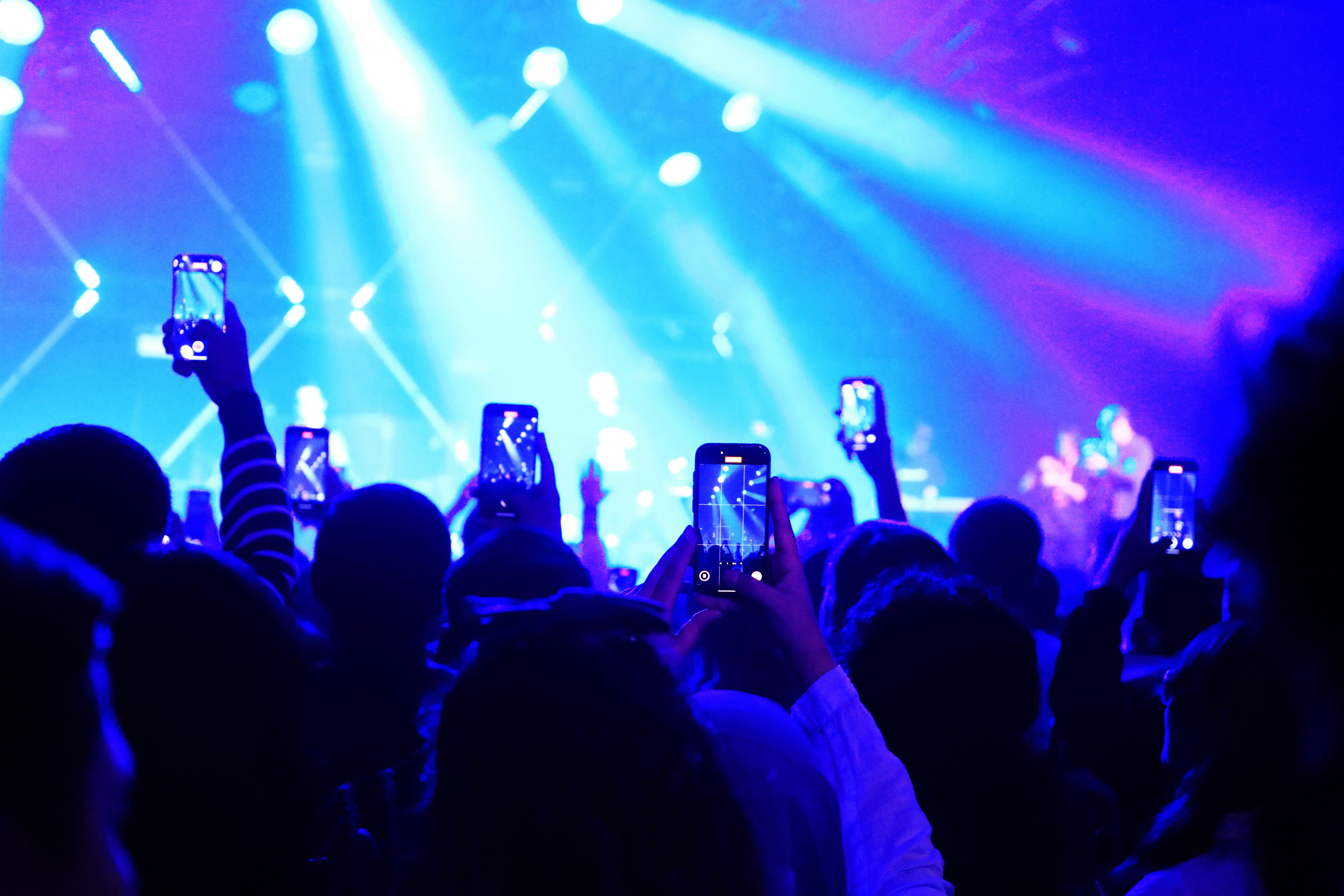
I suspect our near complete saturation with technology, is partly why so many people are parched for genuine experiences. A 2025 Hanover Research survey of prospective college students emphasizes that institutions attracting students today are those prioritizing “student experience” - not just traditional academic reputation. An NBC survey found that nearly half of Gen Z would rather live in an earlier era, apparently because of our saturation with tech. People, it seems, are increasingly resisting and rejecting simulated things. They want to live an authentic life.
This is a good thing.
Campfires. Cooking. Good books. Gardening. Helping the needy. Time with friends. Hunting and fishing. Raising chickens. Philosophy. Long walks without phones. Spirituality. Spontaneity. Time with your partner. Sitting outside during the rain with no intentions other than experiencing it. Some might dismiss these activities as nostalgic, perhaps even anachronistic. I would suggest this is merely the tugging of our roots. A desire to live like our ancestors did for many thousands of years.
Every human being needs to have multiple roots. It is necessary for him to draw wellnigh the whole of his moral, intellectual and spiritual life by way of the environment of which he forms a natural part. ~Simone Weil
René Girard argued humans learn what to desire by watching others desire it first. This concept is called the “theory of memetic desire”. It's an open question whether our mimicry is total (we have no original wants) or partial (sometimes do we mimic). However, in sufficient abundance of mimickers, the net effect is social contagion - virality. There are many examples of this - fashion, status, ambition, politics, outrage, art, and aesthetics. Yet for most of human history these tendencies unfolded within relatively small and isolated communities. But modernity connects all the communities together…then algorithms pump our memetic desires full of steroids. Companies then make it their explicit business model to push contagion onto millions - towards the same fears, aspirations, and performances. For most people, sifting through the haze of memetic desire is exhausting. It flattens and standardizes aspirations, leading to mass conformity. And in the end, memetic desires almost always lead to scapegoats.
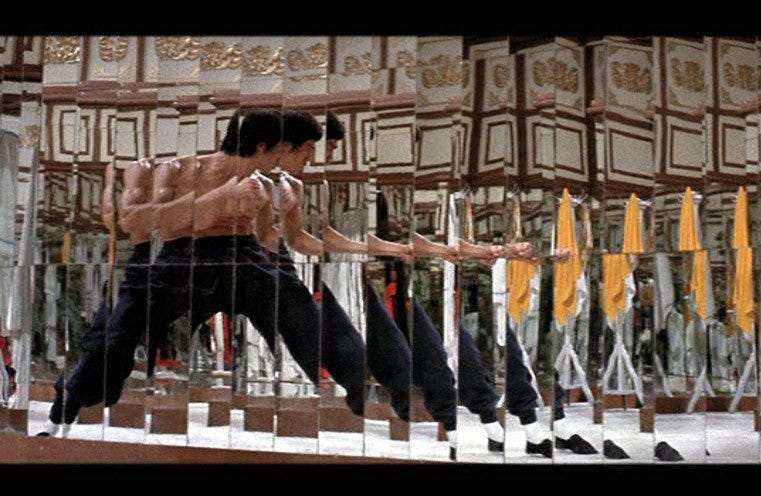
The point I want to make here is this: for many years it seemed like we were all watching each other use tech in this kind of memetic way. Facebook. iPhones. Twitter. Smartwatches. Now, AI. Remember when Clubhouse was going to be the way of the future?! There is definitely virality to use of technology. But if memetic desire got us into this house of mirrors. Perhaps also, we can use it to reverse engineer our escape.
I recently finished the book Against the Machine by Paul Kingsnorth. The thesis is that modern industrial societies separate humans from the physical and spiritual realities that once grounded everything. He fiercely interrogates our bottomless faith that technology can magically solve the very crises they create. Rather than offering optimism, Kingsnorth suggests a kind of sober, perhaps even stoic, re-rooting is necessary. Some kind of movement back to localism, nature, story, and direct lived experience.
I have to admit, I find such arguments convincing.
So, what does rejecting the simulation mean in practice? It means choosing lived over performative experiences. It means spending as much time as possible in the analogue world, and rejecting digital abstractions rather than giving way to them. Building a life around the things that matter, whether anyone is watching or not. Choosing the timeless things.
Our relationship with the digital is not as complicated as we like to think it is. As far as I can tell, technology is equal parts tool and palliative. To which end do each of us use it for? And who do we mimic in regards to its use?
In my own life, when I retreat to nature, and am away from the phone, I begin feeling like my old self within just a day or two. If I'm mimicking anyone with such behavior, it's my Dad, and I certainly trust the things he taught me. And it is in these times, when I am enveloped by the water or the forest, that I find I become my Father's son again. Just a local Wisconsin boy, curious about everything, and wanting to help others. I can feel my sense of spirituality phase back in. And I begin to savor again the simple pleasures of just being alive.
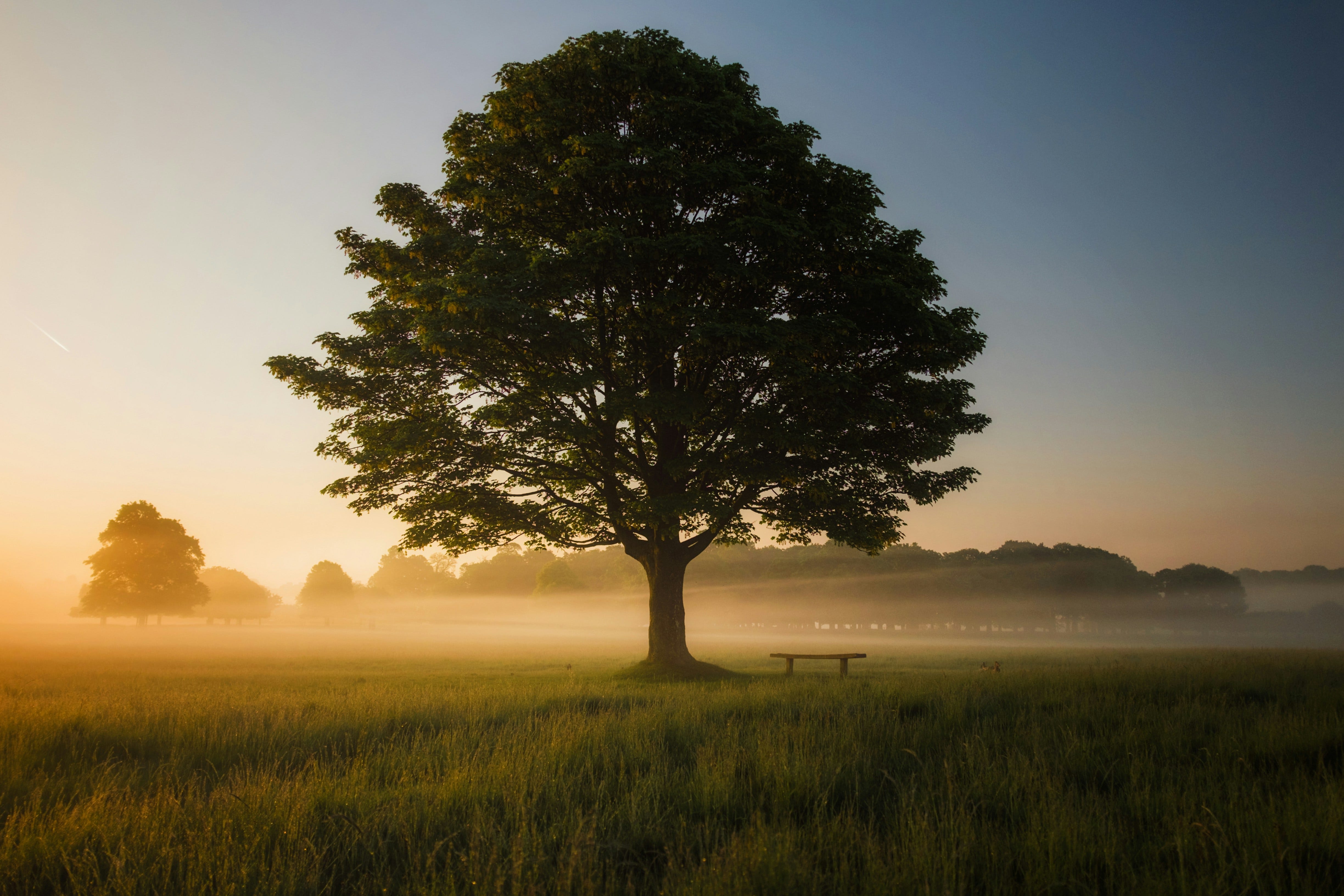
We should rightly reject the simulation more often. Perhaps in small ways, and in our daily routines. And in larger, more periodic retreats. In the seasons of the years, and of life.
When I am ensconced by the natural world, it is so obvious that much of what bothers or ails us (politics, email, your kid’s coach not playing them enough) doesn't actually matter much. The river doesn’t care about your likes or your followers. And the bowfin remains unimpressed by your personal branding.
“And what it all boils down to, is that no one’s really got it figured out just yet” ~Alanis Morissette
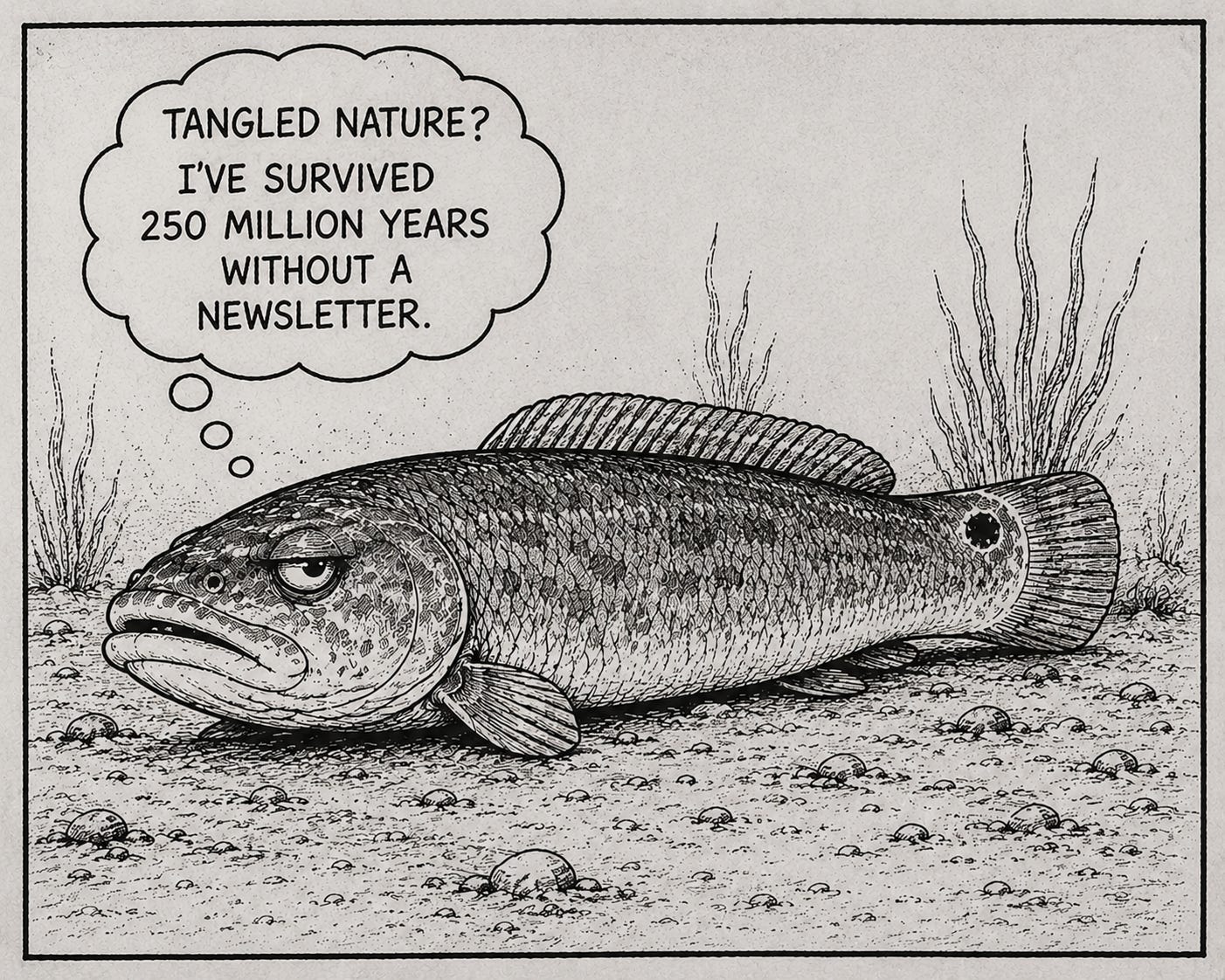
About: Edge Effects are shorter experimental reflections on ideas that take shape in the margins between Tangled Nature’s deeper dives.
Go Deeper
Girard, R. 1961. Deceit, Desire and the Novel. Johns Hopkins University Press.
Kingsnorth, P. 2025. Against The Machine. Penguin Random House.
Paul, F. 2024. Unravelling the philosophy of ‘No Spoon’. Silent Reverie
Weil, S. 1952. Gravity and Grace. Routledge & Kegan Paul.