
Are We Observing the Earth *Less*?
A case for observatories, long-term studies, and museums in an increasingly tech-obsessed world

"People only see what they are prepared to see." ~Ralph Waldo Emerson
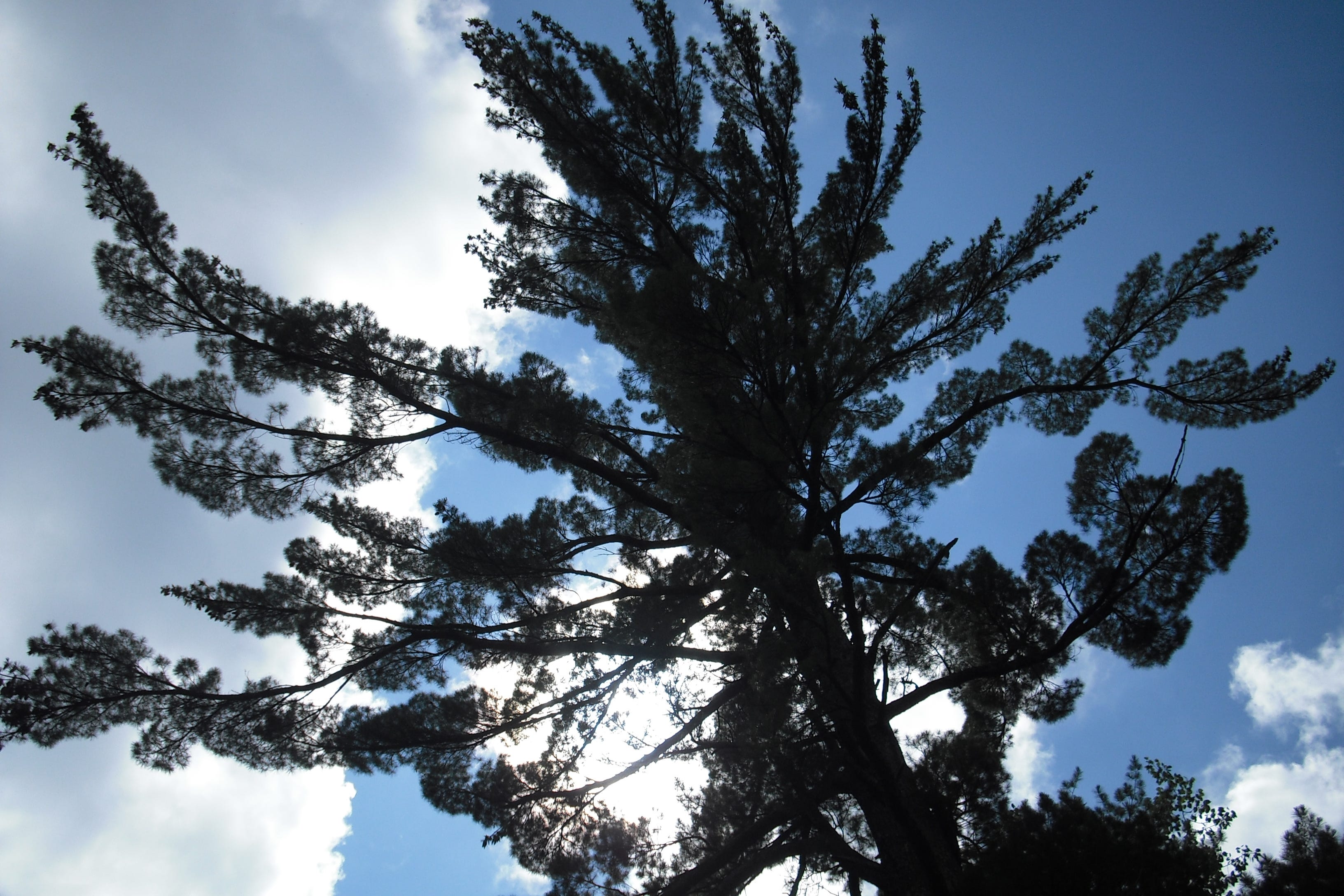
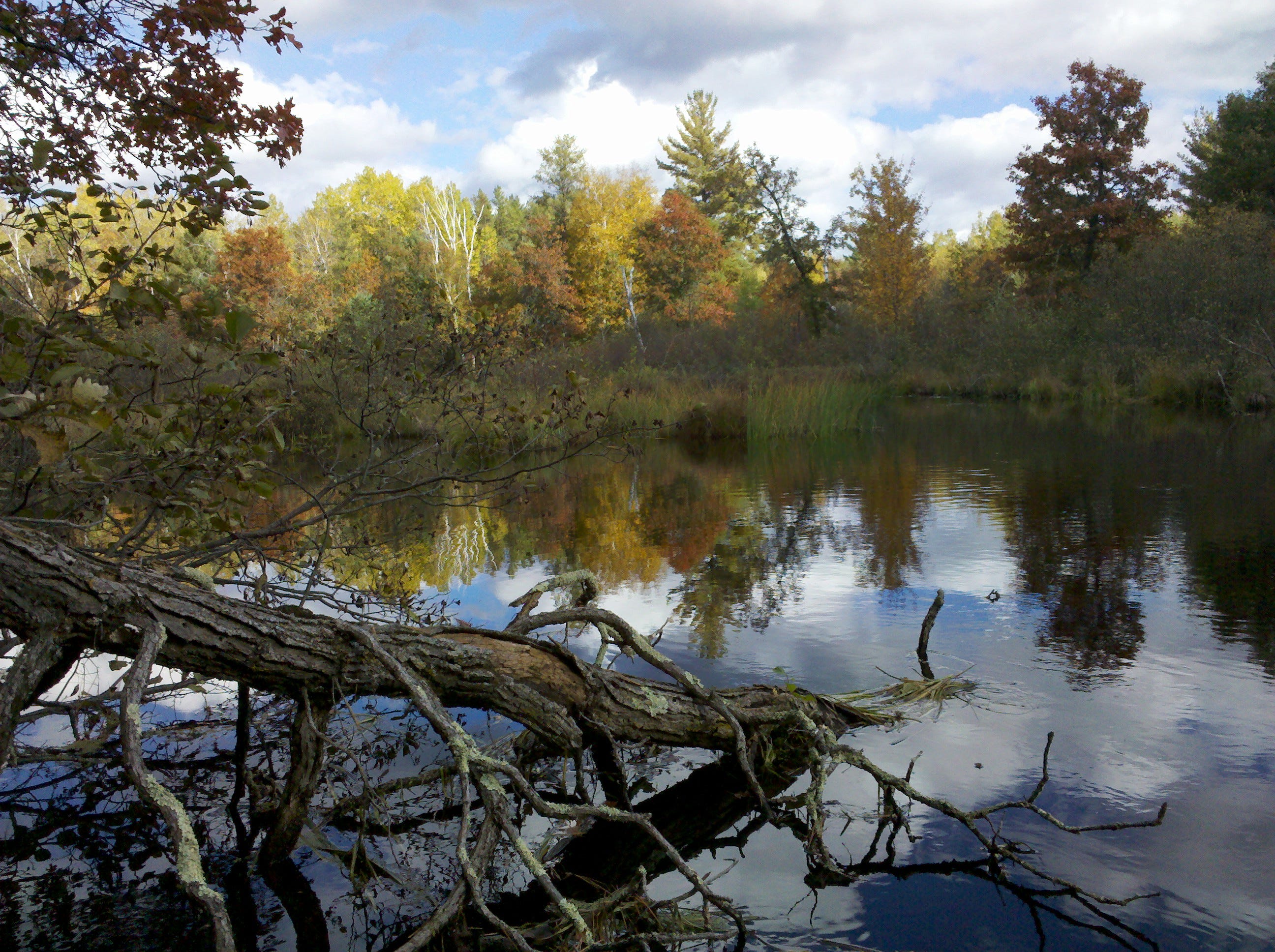
I hadn’t waded this patch of creek in nearly two years. However, I’d been coming here a long time before that. The moment my feet hit the water it seemed much the same as ever. The smell of the woods remained pungent, piney and thick. The water was still clear and slightly tannic, and the riverweed was doing its familiar hypnotic dance, weaving and pulsing in the directional current. Each time I come here, I feel I could see a black bear on the ridge at any moment. But as I waded upstream from the bridge, it was apparent things weren’t the same anymore. At the first bend, a large snag that had been there for years had blown away - that hole/structure always held fish, and now there were none, because the habitat was gone. Further upstream a large white pine, previously leaning towards the channel (photo above), finally lost the battle and had landed into its watery new home. This large pine isn't going anywhere and will fuel the stream with carbon, shade, bugs and structure for decades. There were fewer freshwater mussels than before. The stream had changed. But I only knew this because I had observed this place for years.
Never before have humans possessed so much interesting and useful information about the Earth. We know how fast ice is melting, the weather forecast in your backyard, how birds migrate and when they arrive, and the ways in which forests are changing. And incredibly, all these data can be delivered to your phone instantaneously and with uncanny precision. Satellites, real time sensors, autonomous instruments, and AI now watch the planet continuously. And with every year, they produce an astonishing environmental surveillance record of Earth. I’ve personally worked with many of these technologies.
By almost any measure, humanity has never known more about the Earth. And yet, over the last couple years, I’ve been pestered by the following ironic possibility and title of this essay:
Are we observing the Earth less?
Follow me for a beat. At first blush, the idea may seem borderline ridicule-worthy. Certain activities (birdwatching, citizen science, paddleboarding) are thriving. The sensors and robots are feeding us more data on ecosystems than ever before. The number of scientific papers on the natural environment is growing fast and accelerating. Modern Earth science is becoming one of humanity’s true success stories.
But, I sometimes worry about the kind of relationship scads of super clean data create between ecosystems and us. My last post here was a meditation of sorts on how one ecosystem personally changed me through time, and how sometimes long observation can blur the lines between observer and observed. I want to be careful here about prescribing my own experience to others. There are many ways of knowing. Yet at the same time, the human-environment connection is clearly foundational to the human condition (Kellert and Wilson 1995; Galvani et al. 2016). And when you know a place for a long time, you start to - for lack of a better way of saying this - learn to listen to it somehow.
For most of human history, observation was gained through direct contact with something. A farmer might know the soil was drier because they worked it, and touched it, every single day. A fisher might recognize the lake changed because the water quality or the fish they caught was different. A naturalist knows the flowers are blooming earlier each year because they directly witnessed the pattern over decades. These aren’t mystical abilities. They come from the intimacy and familiarity of returning to the same places, again and again, until what John Magnuson termed the ‘invisible present’ reveals itself.
Some of the most powerful scientific datasets began, not with super high tech instruments, but people making simple observations. At Lake Suwa in Japan, Shinto priests recorded the lake ‘ice-on ice-off’ dates almost every year since the 15th century. Similarly, along the Torne River between Sweden and Finland, generations of people observed and documented the spring breakup of river ice for more than 300 years. These records weren't started to study climate change. Yet they carried forward these observations year after year, presumably because they were believed to be valuable, and worthy of preservation. Centuries later, these kinds of observations are some of the clearest evidence we have on how the Earth’s climate is changing (Sharma et al. 2016).
Today, our encounters with the natural world seem to be increasingly mediated and filtered through a tech lens. Perhaps, we learn forests are stressed because satellites detect changes in leaf color and chemistry - not because we actually walk the lands. We discover fish populations are declining after annual assessments are published - not because we fish the waters ourselves. We hear about migrations because someone reports the arrivals on social media or iNaturalist - not because we know the birds in our neighborhoods personally.
Nature is now reaching us in a kind of sanitized, pre-interpreted, pre-digested way. Yet what good are a bunch of reports, dashboards, notifications, maps, and visualizations, if no one knows what it means? I remember reading this paper suggesting taxonomists were in decline because of the advent of modern genomics. So as species are declining, so too are those that can identify and recognize any of it. Other similar papers soon followed (e.g., Pearson et al. 2011). These ideas seemed absurd at the time, but they were generally right. And now it seems a similar thing is happening throughout other sectors.
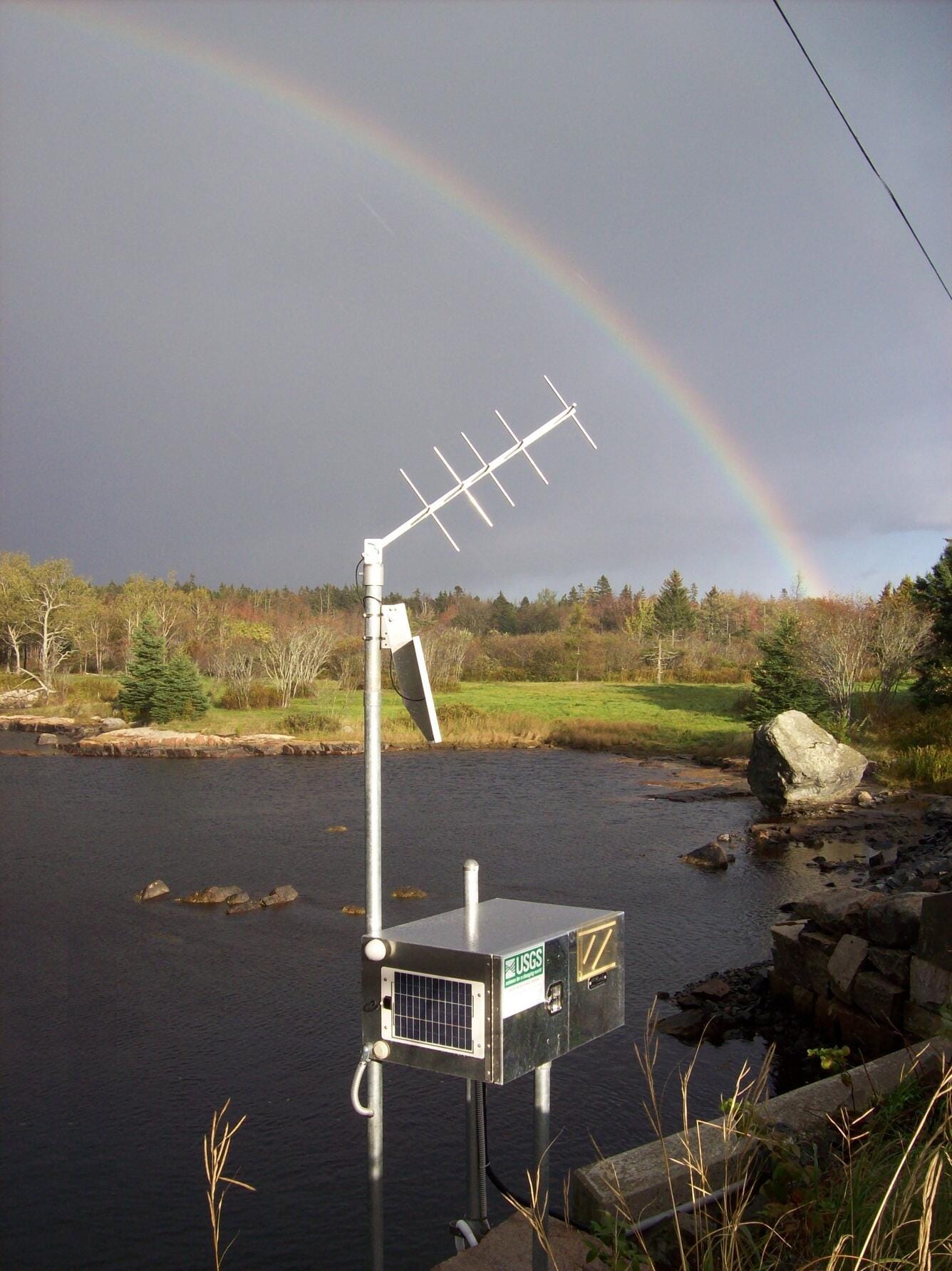
None of this diminishes the extraordinary value of technology and modern science. Technology holds value specifically because it is extrasensory - heightening our abilities to detect things no individual could ever do alone. But there is a difference between knowing more facts about nature and knowing nature. Technology can not replace time in nature. And facts and firehoses of data are not wisdom.
Observation is the foundation of all science. Before every hypothesis, every experiment, every model, and every policy recommendation comes a simple act: someone notices something. Therefore, people that notice things tend to also be good at science. And people who are curious and creative, often notice things. It could be as simple as wondering - that’s weird...what’s up with that?!
When I was a kid growing up in Wisconsin. I was fascinated by the different kinds of species that the different lakes in that part of the world contain. Our tiny Crystal Lake had only dace, stickleback, fathead minnows and bullhead. But nearby North Sand Lake had things like walleye, cisco, smallmouth bass and huge pike. I was obsessed with these patterns. Why couldn't our lake have walleye, catfish or pike?! Haha. Well, it took me decades, but I finally applied the scientific method to figure out that it is lake size that largely mediates the kinds of fishes different lakes support (Rypel 2023). Some lakes just aren't built for certain species.
People must experience nature first hand to truly understand it. Field stations, natural history museums, long-term ecological research sites, and Earth observatories are among civilization’s greatest inventions. They represent our very best. And in many cases, they remain devoted to the noble mission of collecting data that will outlive the careers of any single scientist. They preserve observations across decades. They return to the same lakes, forests, coastlines, and glaciers generation after generation.
Most importantly, these are places of education for students and anyone seeking the truth about our tangled world. I wrote once about the transformational experience a single field course had in my own journey. Over the years, observatories and other institutions with similar missions have cultivated entire communities of people, stretching across generations now, whose expertise arises primarily from knowing places extremely well. Knowing places with their own hands - on a boat, in the dirt, in the quadrats measuring plants. After all, an observatory is a formalized commitment to paying close attention to something - an ecosystem, a landscape, or even, the Earth.
And perhaps that is the real scarcity today - not data - but our attention. We constructed massive environmental surveillance systems, yet fewer institutions and PIs are devoted to cultivating people and projects that know places extremely well. And the “attention economy” only piles on - robbing all of us of that which truly matters and yields valuable insights.
That is partly why some institutions matter now, more than ever before. As technology makes environmental information increasingly abundant and accessible, careful human observation becomes the scarce thing. Advanced analytical tools are widely available, and AI makes coding them a snap. So, the limiting resource is no longer computational power, but the people who know what the data actually mean (Drake 2026). Taken together, it suggests a renewed importance for field scientists. And institutions that cultivate people who genuinely know places closely enough to understand data. These are likely the future winners.
Ultimately, this is about passing things on. Sometimes it is the natural resources themselves. Sometimes it is culture, knowledge, wisdom, or even a single dataset whose true value may not be realized for decades. These gifts are irreplaceable. They deserve our gratitude, our stewardship, and our commitment to carrying them forward. And we should protect them at almost all costs.
"Attention is the rarest and purest form of generosity." ~Simone Weil
A storm chased me off the creek that day, so I was sad to not get the chance to walk the full patch of stream that I normally do. But that is okay, because today, the stream reminded me that it changed. More importantly, it reminded me that someone has to keep paying attention, if we genuinely want to know.
And that gave me the idea for this essay, which I now transmit to you.
Go Deeper
Colbert, J. 2025. Passing It On. In Your Nature.
Drake, J.M. 2026. AI, comparative advantage, and the next decade of ecological research. Ecology Letters 29: e70427
Galvani, A.P., C.T. Bauch, M. Anand, B.H. Singer, and S.A. Levin. 2016. Human-environment interactions in population and ecosystem health. Proceedings of the National Academy of Sciences 113: 14502-14506.
Hopkins, G.W., and R.P. Freckleton. 2002. Declines in the numbers of amateur and professional taxonomists: implications for conservation. Animal Conservation 5: 245-249.
Kellert, S.R., and E.O. Wilson. 1995. The Biophilia Hypothesis. Island Press.
Magnuson J.J. 1990. Long-term ecological research and the invisible present. Bioscience 40: 495-501.
Pearson, D.L., A.L. Hamilton, and T.L. Erwin. 2011. Recovery plan for the endangered taxonomy profession. Bioscience 61: 58-63.
Rypel, A.L. 2020. Field courses help young people see the real world. California WaterBlog.
Rypel, A.L. 2026. Crystal Lake - My Oldest Friend. Tangled Nature.
Rypel, A.L. 2023. Ecosystem size filters life-history strategies to shape community assembly in lakes. Journal of Animal Ecology 92: 1161-1175. Companion blog here.
Sharma, S., J.J. Magnuson, R.D. Batt, L.A. Winslow, J. Korhonen, and Y. Aono. 2016. Direct observations of ice seasonality reveal changes in climate over the past 320–570 years. Scientific Reports 6: 25061.
https://www.nsf.gov/funding/opportunities/lter-long-term-ecological-research/7671/nsf24-520
Andrew: Great writing...thank you. In addition to what you have observed, there is, as you know a sad anti-science/anti-knowledge movement at work among some of our populace. That, and just less time that people are outside without laptops, phones, radios, earbuds, etc. Keep up the good work. If you ever drive up through the Upper Peninsula, let me know as it would be good to meet you and I'll buy you a coffee...or lunch!
Gregg
Escanaba
Excellent piece Andrew! I completely agree that personal experience/connection with the natural world is essential - and often lacking.
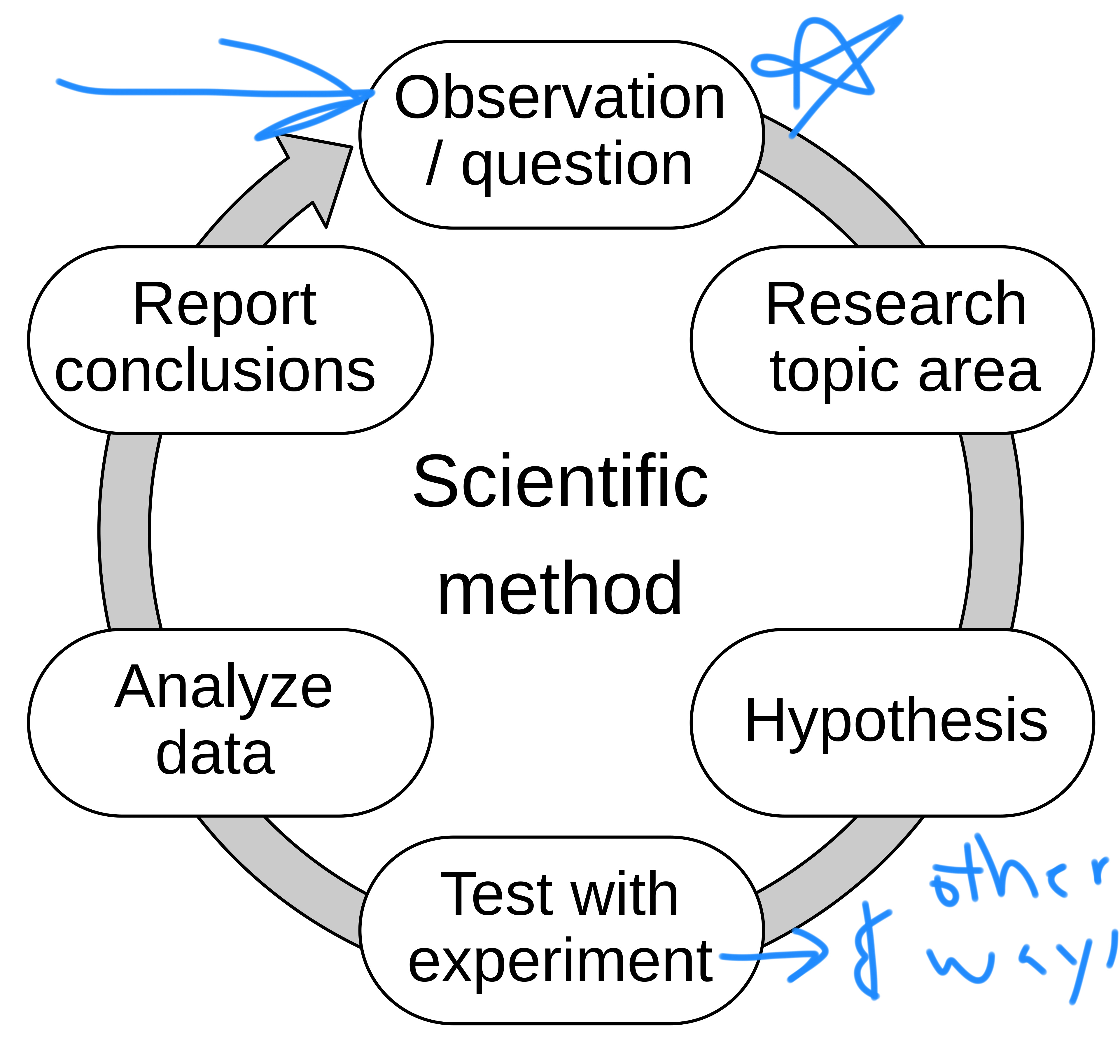
I have but one quibble - and it’s not with you, it’s with Wikipedia’s view of the “scientific method”. The diagram implies that hypotheses are always tested with “experiments”. They aren’t. Some hypotheses are not testable with experiments - they are tested by further observation. For example, a hundred years ago somebody must have hypothesized that there were planets around other stars. That hypothesis was tested (and found to be correct) by more careful observation, with better tools - not by experiment.
I became sensitized to this when former students told me “evolution is not science, because it can’t be tested by experiment”. Obviously, SOME aspects of evolution CAN be tested experimentally, but the evolutionary history of life on Earth (no - humans and dinosaurs [except birds] did not cohabitate!) can only be tested by observation - and that is STILL science…👍